Lenovo or PCSP? Gaming Desktops Compared in 2026
As an Amazon Associate we earn from qualifying purchases. Links on this page are affiliate links.
We compare the lenovo vs PCSP gaming desktop options to help you decide. Both machines run Windows 11 Pro and offer solid storage speeds. The main difference lies in their core components. The Lenovo ThinkCentre uses a dual-core processor and integrated graphics, making it suitable for light tasks. The PCSP P520 features a high-end Xeon processor and a dedicated P4000 graphics card, targeting heavy workloads. This contrast defines their respective strengths.
Key differences
| Aspect | Lenovo ThinkCentre SFF Core i3 Desktop | PCSP P520 Xeon W-2245 Desktop |
|---|---|---|
| Processor | Intel Core i3-6100 (Dual Core) | Intel Xeon W-2245 |
| Memory | 8GB RAM | 128GB RAM |
| Graphics Card | Integrated VGA | NVIDIA P4000 |
| Storage | 256GB SSD | 512GB NVMe SSD |
Which one should you choose?
Choose Lenovo ThinkCentre SFF Core i3 Desktop if
- You need a compact system for basic office tasks and web browsing.
- You prefer a smaller form factor that fits easily on a desk.
- You want a machine with sufficient power for everyday productivity without specialized software needs.
Choose PCSP P520 Xeon W-2245 Desktop if
- You require significant processing power for CAD or 3D modeling.
- You need dedicated graphics capabilities for professional visualization.
- You plan to run memory-intensive applications that benefit from large RAM capacities.
Verdict: The Lenovo ThinkCentre is the practical choice for standard office work and general computing. The PCSP P520 is better suited for professional users who need serious processing power and dedicated graphics for demanding tasks.
Lenovo vs PCSP Desktop Specs
processor power
The Lenovo ThinkCentre M710 uses a 6th Gen dual-core i3-6100 running at 3.70 GHz. This CPU handles basic tasks like web browsing and document editing well. In contrast, the PCSP P520 features an Intel Xeon W-2245 clocked at 3.90 GHz. Xeons are designed for professional workstations, offering more cores and higher stability for heavy loads. The Xeon chip provides significantly more processing headroom for complex calculations, video rendering, or running multiple virtual machines simultaneously. If you need raw computational strength for demanding software, the Xeon is the superior choice.
memory capacity
Memory determines how many applications you can run at once without slowing down. The Lenovo ThinkCentre comes with 8GB of RAM. This is sufficient for light office work and casual media consumption but may struggle with modern multitasking. The PCSP P520 is configured with 128GB of DDR4 RAM. This massive amount of memory allows for extensive data processing, large database handling, and heavy multitasking without any performance hit. For any professional workflow involving large files or memory-intensive programs, the PCSP offers a substantial advantage in capacity.
graphics capabilities
Graphics processing is critical for gaming, 3D modeling, and video editing. The Lenovo ThinkCentre relies on integrated graphics, which share system resources and lack dedicated video memory. It is not designed for gaming or 3D work. The PCSP P520 includes a dedicated NVIDIA P4000 graphics card. This workstation-class GPU provides its own VRAM and optimized drivers for CAD and 3D applications. It delivers much higher frame rates in games and significantly faster rendering times in professional software. For any visual-heavy tasks, the dedicated GPU in the PCSP is essential.
storage speed
Both systems use solid-state drives for fast boot times and quick file access. The Lenovo ThinkCentre includes a 256GB SSD. This capacity is adequate for the operating system and a few essential programs, but it fills up quickly with large files or games. The PCSP P520 features a 512GB NVMe SSD. NVMe drives connect directly to the motherboard, offering faster read and write speeds than standard SATA SSDs found in many budget PCs. The PCSP also doubles the storage space. For faster load times and more room for your library, the PCSP storage is superior.
form factor
Physical size affects where you can place the computer and how much desk space it uses. The Lenovo ThinkCentre M710 is a Small Form Factor (SFF) desktop. It is compact, lightweight, and designed to fit easily into tight spaces or under a desk. The PCSP P520 is a workstation chassis, which is typically larger and heavier to accommodate powerful components and better cooling. If you have limited desk space or need a portable office solution, the Lenovo is the better fit. For a stationary setup where performance matters more than size, the PCSP is acceptable.
Which Lenovo or PCSP Desktop Should You Buy
Users needing basic home office tasks
The Lenovo ThinkCentre M710 SFF features a dual-core i3-6100 processor and 8GB of RAM. This configuration handles everyday activities like web browsing and document editing smoothly. Its compact form factor saves desk space while the 256GB SSD provides fast boot times. This machine is ideal for simple productivity needs without requiring complex hardware.
Professionals requiring high-end workstation power
The PCSP P520 Workstation is built for demanding tasks like CAD and 3D modeling. It includes an Intel Xeon W-2245 processor and a dedicated P4000 graphics card. With up to 128GB of RAM and a 512GB NVMe SSD, this system offers immense processing power and storage speed. It is the clear choice for heavy computational workloads.
Buyers prioritizing large memory capacity
If you need significant memory for multitasking or virtualization, the PCSP P520 is the superior option. It supports configurations with up to 128GB of DDR4 RAM, far exceeding the Lenovo's 8GB. This vast memory allowance ensures smooth performance when running multiple resource-intensive applications simultaneously, making it essential for professional workstations.
The products compared
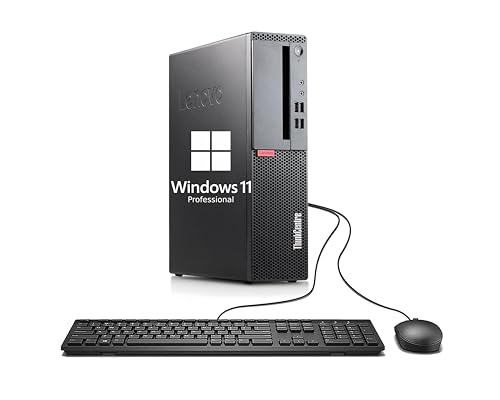
Lenovo ThinkCentre SFF Core i3 Desktop
Best for: basic office tasks and web browsing
- Processor Model
- Dual Core i3-6100
- System Memory
- 8GB
- Storage Capacity
- 256GB SSD
- Operating System
- Windows 11 Pro
- Form Factor
- Small Form Factor
View on Amazon: Lenovo ThinkCentre SFF Core i3 Desktop Affiliate link
This Lenovo ThinkCentre M710 SFF is a compact desktop built for basic computing. It features a 6th Gen Dual Core i3-6100 processor running at 3.70GHz. The system includes 8GB of RAM and a 256GB SSD for fast boot times and light multitasking. It runs Windows 11 Pro and offers standard connectivity ports. This machine suits users who need a small footprint for office work or web browsing rather than heavy gaming.
Pros
- Compact Small Form Factor design saves desk space
- 6th Gen Dual Core i3-6100 processor at 3.70GHz
- 8GB RAM and 256GB SSD for responsive performance
- Includes Windows 11 Pro operating system
Cons
- Dual Core i3 processor limits heavy multitasking
- 8GB RAM is insufficient for modern gaming
- No dedicated graphics card included
Good fit if
- You need a small desktop for office tasks
- You require Windows 11 Pro for work
- You want a system for web browsing and documents
Skip if
- You plan to play demanding video games
- You need high-end 3D rendering capabilities
- You require more than 8GB of system memory
Verdict: Lenovo ThinkCentre M710 SFF is a modest entry-level desktop for light productivity. It fits users who prioritize a small size and basic office functions over gaming power.

PCSP P520 Xeon W-2245 Desktop
Best for: CAD and 3D modeling workflows
- Graphics Card
- P4000
- Processor Model
- Xeon W-2245 3.90GHz
- System Memory
- 128GB
- Storage Capacity
- 512GB NVMe SSD
- Operating System
- Win11 Pro
- Use
- Workstation
View on Amazon: PCSP P520 Xeon W-2245 Desktop Affiliate link
This PCSP P520 workstation pairs an Intel Xeon W-2245 processor with a massive 128GB of DDR4 RAM. It includes a Quadro P4000 graphics card and a 512GB NVMe SSD. The system runs Windows 11 Pro. This configuration targets users who need heavy multitasking capabilities for CAD or 3D modeling. The high memory capacity allows you to handle large datasets without slowing down.
Pros
- Intel Xeon W-2245 3.90GHz processor
- 128GB DDR4 system memory
- Quadro P4000 graphics card
- 512GB NVMe SSD storage
- Windows 11 Pro operating system
Cons
- 512GB storage may fill quickly with large 3D files
- Quadro P4000 is not optimized for modern gaming
- Lacks dedicated high-end gaming GPU
Good fit if
- You run professional CAD or 3D modeling software
- You need high RAM for virtualization or data processing
- You prioritize workstation stability over gaming performance
Skip if
- You want to play the latest AAA games
- You need more than 512GB of storage
- You prefer consumer-grade GeForce graphics cards
Verdict: PCSP P520 Workstation Xeon 128GB is a capable machine for professionals who require substantial memory and processing power. It suits engineers and designers who need reliable performance for heavy applications rather than gamers.
Specifications side by side
| Spec | Lenovo ThinkCentre SFF Core i3 Desktop | PCSP P520 Xeon W-2245 Desktop |
|---|---|---|
| Graphics Card | not stated | P4000 |
| Processor Model | Dual Core i3-6100 | Xeon W-2245 3.90GHz |
| System Memory | 8GB | 128GB |
| Storage Capacity | 256GB SSD | 512GB NVMe SSD |
| Operating System | Windows 11 Pro | Win11 Pro |
| Form Factor | Small Form Factor | not stated |
| Processor | not stated | Intel Xeon |
| Memory | 8GB RAM | 128GB RAM |
| Storage | 256GB SSD | not stated |
| Use | not stated | Workstation |
| Size | Small | 128GB DDR4 RAM |
| Color | Black | not stated |
| Model | Lenovo ThinkCentre M710 SFF | PCSP P520 |
Frequently asked questions
Is the Lenovo ThinkCentre suitable for modern gaming?
No. This desktop is designed for basic office tasks and web browsing. It features a dual-core processor and integrated graphics, which lack the power needed for demanding games. You should look elsewhere if you need high frame rates or advanced visual effects for gaming titles.
Can the PCSP P520 handle 3D modeling?
Yes. This machine is built for CAD and 3D modeling workflows. It includes an Intel Xeon processor and a substantial 128GB of RAM. These components provide the processing power and memory capacity required for heavy professional applications, making it a strong choice for engineers and designers.
What operating system comes with these desktops?
Both systems include Windows 11 Pro. This operating system provides a familiar interface and enhanced security features for professional use. You get the full functionality of the latest Windows version without needing to purchase or install additional software separately upon receiving the device.
Does the Lenovo ThinkCentre have enough storage?
It has 256GB of SSD storage. This amount is sufficient for installing the operating system, essential applications, and a moderate number of files. However, it may fill up quickly if you store large media libraries or numerous games, so external storage might be necessary for heavy users.
Is the PCSP P520 a gaming PC?
No. It is classified as a workstation. The system prioritizes reliability and processing power for professional tasks over gaming performance. While it can run games, it is optimized for engineering and design software rather than providing the dedicated graphics capabilities typical of gaming desktops.
Which desktop is smaller in size?
The Lenovo ThinkCentre is a Small Form Factor (SFF) unit. Its compact design makes it easy to fit into tight spaces under desks or on shelves. The PCSP P520 is a standard workstation size, which requires more desk space but houses more robust internal components for professional workloads.
How much RAM does the Lenovo model have?
It comes with 8GB of RAM. This amount allows for smooth multitasking during light productivity work, such as web browsing and document editing. It is adequate for everyday home office needs but may limit performance if you run many applications simultaneously or use memory-intensive software.