ASUS ROG Strix Ryzen 5 GTX 1650 Gaming Desktop vs ASUS ROG Strix GTX 1660 Ti Gaming Desktop: Spec Comparison
As an Amazon Associate we earn from qualifying purchases. Links on this page are affiliate links.
This comparison looks at the asus rog strix ryzen 5 gtx 1650 gaming desktop vs rog strix gtx 1660. Both units come from ASUS and feature Ryzen 5 processors and Windows operating systems. The main difference lies in performance capabilities. The first model uses a GTX 1650 with 8GB of RAM. The second model upgrades to a GTX 1660 Ti and 16GB of RAM. These changes affect how you can play games and run applications. We will break down the specific hardware differences to help you decide.
Key differences
| Aspect | ASUS ROG Strix Ryzen 5 GTX 1650 Gaming Desktop | ASUS ROG Strix GTX 1660 Ti Gaming Desktop |
|---|---|---|
| Graphics Card | NVIDIA GeForce GTX 1650 4GB | NVIDIA GeForce GTX 1660 Ti |
| Processor | AMD Ryzen 5 3400G (4.2 GHz) | AMD Ryzen 5 3600X (4.4 GHz) |
| System Memory | 8GB DDR4 | 16GB DDR4 SDRAM |
| Storage | 512GB PCIe NVMe SSD | 1TB PCIe NVMe SSD |
| Operating System | Windows 10 Home | Windows 11 Home |
Which one should you choose?
Choose ASUS ROG Strix Ryzen 5 GTX 1650 Gaming Desktop if
- You need a lower entry price point for basic gaming
- You prefer the Windows 10 interface
- You have limited space and want a lighter unit
Choose ASUS ROG Strix GTX 1660 Ti Gaming Desktop if
- You want better 1080p gaming performance with the 1660 Ti
- You need 16GB of RAM for multitasking
- You require more storage space with a 1TB drive
Verdict: The second desktop offers significantly better graphics and memory for modern gaming. The first model is suitable only for light tasks or older titles. Choose the second option if you want a more future-proof system.
Specs: Ryzen 5 3400G vs 3600X
Processor
Product A uses the AMD Ryzen 5 3400G, an octa-core processor with a base clock of 3.7 GHz and a boost up to 4.2 GHz. It includes integrated Vega graphics alongside the dedicated GPU. Product B features the AMD Ryzen 5 3600X, a six-core, twelve-thread CPU with a higher base of 3.8 GHz and a boost up to 4.4 GHz. It also has a larger 32MB L3 cache. The 3600X offers stronger single-core and multi-core performance for demanding tasks, while the 3400G provides extra cores for background processes.
Graphics Card
Product A is equipped with the NVIDIA GeForce GTX 1650 with 4GB of VRAM. This card handles 1080p gaming at medium to high settings in many titles. Product B upgrades to the NVIDIA GeForce GTX 1660 Ti. This GPU delivers significantly better frame rates and visual fidelity in modern games. The 1660 Ti has more CUDA cores and higher memory bandwidth. If your priority is playing the latest titles smoothly at higher settings, the 1660 Ti in Product B is the clear choice for gaming performance.
Memory
Product A comes with 8GB of DDR4 RAM running at 2666 MHz. This amount is sufficient for basic gaming and multitasking but may bottleneck modern games or heavy workloads. Product B includes 16GB of DDR4 SDRAM. This doubled capacity allows for smoother multitasking, better performance in memory-intensive games, and easier handling of background applications. For a gaming desktop in 2026, 16GB is the recommended standard. Product B provides the necessary headroom for future software demands.
Storage
Product A features a 512GB PCIe NVMe M.2 SSD. This provides fast boot times and quick game loading speeds. However, the capacity fills up quickly with modern game installations. Product B offers a 1TB PCIe NVMe SSD. This double the storage space allows you to install more games and applications without managing space as strictly. Both drives use fast NVMe technology, so load times will be similar. The larger capacity in Product B makes it more practical for a growing library.
Operating System
Product A ships with Windows 10 Home. While still supported, it is an older version of the operating system. Product B includes Windows 11 Home, the latest major release. Windows 11 offers updated security features, a refreshed user interface, and better support for newer hardware technologies. It also includes features like DirectStorage for faster game loading. If you want the most current software environment and long-term support, Product B is the better option.
Connectivity
Product A includes Gigabit Wi-Fi 5 (802.11ac) for wireless connectivity. It also provides one HDMI, one DisplayPort, and one DVI output. Product B lists eight USB Type-A ports and multiple video outputs including three HDMI and two DisplayPort connections. It also includes a VGA port. Product B offers more physical ports for peripherals and displays. The exact wireless capabilities for Product B are not specified in the data, but the port selection is more extensive for connecting multiple devices.
Which gaming desktop fits your needs?
Budget-conscious entry gamers
You should choose this model if you want to keep costs low while still getting a functional gaming setup. It features an AMD Ryzen 5 3400G processor and NVIDIA GTX 1650 graphics. The 8GB of RAM and 512GB SSD provide adequate speed for everyday tasks and lighter titles. It also includes Wi-Fi 5 connectivity for easy internet access without extra cables.
Users needing more power and storage
This desktop offers stronger performance with the Ryzen 5 3600X processor and GTX 1660 Ti graphics card. You get double the memory at 16GB DDR4 and double the storage with a 1TB SSD. It runs Windows 11 Home for the latest features. The extra processing power and graphics capability allow for smoother gameplay in more demanding applications and games compared to the base model.
Those wanting modern connectivity
You will benefit from the updated ports and modern operating system on this unit. It includes three HDMI ports and two DisplayPort outputs, giving you more flexibility for multiple monitors. The Windows 11 Home OS provides a current interface and security updates. Additionally, the inclusion of a wired keyboard and mouse means you have the necessary peripherals ready to use right out of the box.
The products compared

ASUS ROG Strix Ryzen 5 GTX 1650 Gaming Desktop
Best for: Entry-level 1080p gaming and light multitasking
- Graphics Card
- NVIDIA GeForce GTX 1650 4GB
- Processor Model
- AMD Ryzen 5 3400G
- System Memory
- 8GB DDR4
- Operating System
- Windows 10 Home
- Form Factor
- Desktop
- Storage
- 512GB SSD
View on Amazon: ASUS ROG Strix Ryzen 5 GTX 1650 Gaming Desktop Affiliate link
This ASUS ROG Strix desktop pairs an AMD Ryzen 5 3400G processor with an NVIDIA GeForce GTX 1650 graphics card. It includes 8GB of DDR4 RAM and a 512GB PCIe SSD. The system runs Windows 10 Home and features Wi-Fi 5 connectivity. The compact chassis includes customizable RGB lighting. It suits users seeking entry-level gaming performance for modern titles at lower settings.
Pros
- AMD Ryzen 5 3400G octa-core processor with up to 4.2 GHz boost
- NVIDIA GeForce GTX 1650 4GB dedicated graphics
- 512GB PCIe NVMe M.2 SSD for fast storage
- Gigabit Wi-Fi 5 (802.11ac) wireless connectivity
Cons
- Only 8GB of system RAM limits multitasking
- GTX 1650 is an entry-level GPU for high settings
- No mention of Ethernet port or wired connectivity options
Good fit if
- You want a prebuilt PC for 1080p gaming at medium settings
- You need built-in Wi-Fi for wireless connectivity
- You prefer a compact form factor with RGB lighting
Skip if
- You require 16GB or more RAM for heavy multitasking
- You plan to play demanding games at ultra settings
- You need a dedicated wired Ethernet connection
Verdict: ASUS ROG Strix Ryzen 5 GTX 1650 Desktop delivers solid entry-level performance for casual gamers. It fits users who want plug-and-play gaming with wireless convenience but do not need high-end graphics or extensive RAM.
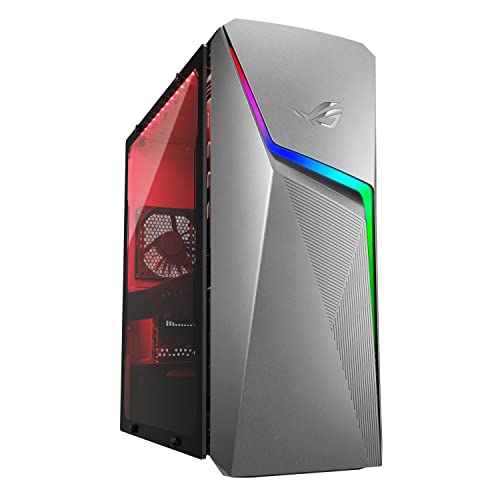
ASUS ROG Strix GTX 1660 Ti Gaming Desktop
Best for: 1080p gaming and multitasking
- Graphics Card
- NVIDIA GeForce GTX 1660 Ti
- Processor Model
- AMD Ryzen 5 3600X
- System Memory
- 16GB DDR4 SDRAM
- Storage Capacity
- 1TB PCIe NVMe SSD
- Operating System
- Windows 11 Home
- Dimensions
- 16.9 × 16.9 × 7 inches
View on Amazon: ASUS ROG Strix GTX 1660 Ti Gaming Desktop Affiliate link
This ASUS ROG Strix GL10 desktop pairs an AMD Ryzen 5 3600X processor with a GTX 1660 Ti graphics card. It includes 16GB of DDR4 RAM and a 1TB PCIe NVMe SSD for fast data access. The system runs Windows 11 Home and offers multiple display outputs. It suits gamers seeking solid 1080p performance without the bulk of high-end hardware.
Pros
- AMD Ryzen 5 3600X 6-Core Processor with 4.4 GHz boost
- NVIDIA GeForce GTX 1660 Ti graphics for 1080p gaming
- 16GB DDR4 SDRAM for multitasking
- 1TB PCIe NVMe SSD for quick boot times
- Windows 11 Home pre-installed
Cons
- GTX 1660 Ti is an older generation GPU compared to newer RTX models
- 29-pound weight makes it less portable than smaller form factors
- No mention of wireless connectivity like Wi-Fi or Bluetooth in specs
Good fit if
- You want reliable 1080p gaming performance
- You need a desktop with ample storage for games
- You prefer a wired connection for stable network speeds
Skip if
- You require high-end ray tracing capabilities
- You need wireless audio or network connectivity
- You prefer a compact mini-PC form factor
Verdict: ASUS ROG Strix Ryzen 5 3600X 16GB Gaming PC delivers steady 1080p performance for mainstream gamers. It fits users who prioritize CPU power and fast storage over cutting-edge graphics features.
Specifications side by side
| Spec | ASUS ROG Strix Ryzen 5 GTX 1650 Gaming Desktop | ASUS ROG Strix GTX 1660 Ti Gaming Desktop |
|---|---|---|
| Graphics Card | NVIDIA GeForce GTX 1650 4GB | NVIDIA GeForce GTX 1660 Ti |
| Processor Model | AMD Ryzen 5 3400G | AMD Ryzen 5 3600X |
| System Memory | 8GB DDR4 | 16GB DDR4 SDRAM |
| Storage Capacity | not stated | 1TB PCIe NVMe SSD |
| Operating System | Windows 10 Home | Windows 11 Home |
| Form Factor | Desktop | not stated |
| Processor | Ryzen 5 | Ryzen 5 |
| Memory | 8GB RAM | 16GB RAM |
| Storage | 512GB SSD | not stated |
| Dimensions | 16.9 × 7.1 × 16.9 inches | 16.9 × 16.9 × 7 inches |
| Weight | 17.6 pounds | 29 pounds |
| Size | R8|S512 | 16GB RAM | 1TB SSD |
| Color | Black | Grey |
| Model | GL10DH-PH552 | GL10 |
Frequently asked questions
Which desktop has better graphics performance?
The ASUS ROG Strix GTX 1660 Ti Gaming Desktop offers stronger graphics capabilities. It includes a GTX 1660 Ti graphics card, which handles 1080p gaming and multitasking more effectively than the GTX 1650 found in the other model. This makes it a better choice for users seeking steady mainstream gaming performance without needing cutting-edge features.
Does the second model include more RAM?
Yes, the ASUS ROG Strix GTX 1660 Ti Gaming Desktop comes with 16GB of RAM. The first model only includes 8GB of RAM. This additional memory allows the second unit to handle more demanding multitasking and gaming scenarios with greater ease, supporting the Ryzen 5 processor's capabilities for heavier workloads.
Which system runs a newer Windows version?
The ASUS ROG Strix GTX 1660 Ti Gaming Desktop runs Windows 11 Home. The first model ships with Windows 10 Home. Upgrading to Windows 11 provides access to the latest system features and security updates, ensuring your gaming setup remains compatible with modern software requirements right out of the box.
Is there a difference in storage capacity?
Yes, the second desktop includes a 1TB SSD, while the first model has a 512GB SSD. The larger storage space in the GTX 1660 Ti unit allows you to install more games and applications without running out of room. This is particularly useful if you maintain a large library of high-resolution games.
Which unit is lighter and easier to move?
The ASUS ROG Strix Ryzen 5 GTX 1650 Gaming Desktop is significantly lighter at 17.6 pounds. The GTX 1660 Ti model weighs 29 pounds. If you plan to move your gaming PC frequently or have limited desk space, the lighter first model offers more convenient portability without sacrificing basic entry-level performance.
What is the primary use case for each?
The first model is best for entry-level 1080p gaming and light multitasking. The second model is designed for general 1080p gaming and heavier multitasking. You should choose the first if you want plug-and-play convenience with wireless features. Choose the second if you prioritize CPU power and faster storage for a smoother gaming experience.