512GB SSD vs 256GB SSD All-In-One Desktops: Which Should You Buy?
As an Amazon Associate we earn from qualifying purchases. Links on this page are affiliate links.
You are looking at two Apple iMac models with a 512GB SSD vs 256GB SSD all in one desktop comparison. Both units share the same 24-inch 4.5K Retina display, 8GB of RAM, and the Apple M1 processor. The main difference lies in the internal storage capacity and the graphics core count. One model offers double the storage space, while the other provides a slightly different GPU configuration. This guide breaks down these specific hardware distinctions to help you decide which configuration fits your needs.
Key differences
| Aspect | Apple iMac 24-Inch M1 Desktop | Apple iMac 24-Inch M1 Desktop |
|---|---|---|
| Storage | 512GB SSD | 256GB SSD |
| Graphics | 8-core GPU | 7-core GPU |
| Color | Green | Blue |
| Condition | New | Renewed |
Which one should you choose?
Choose Apple iMac 24-Inch M1 Desktop if
- You have a limited budget and do not require extensive local storage.
- You primarily use cloud services for file storage and media.
- You are comfortable with a renewed product in the Blue color option.
Verdict: Choose the 512GB model if you need more room for your files and want the slightly faster 8-core GPU. The 256GB model is a viable option if you rely on cloud storage and are looking for a lower-cost, renewed unit. Both devices offer the same sharp display and efficient M1 performance.
Storage and GPU Comparison
Storage capacity
The Apple iMac 24-Inch M1 Desktop with 8GB RAM and 512GB SSD offers double the internal storage of its counterpart. You get 512GB of ultrafast SSD space on Product A, which helps when you store large video files, extensive photo libraries, or multiple high-end applications. Product B provides only 256GB of SSD storage. While both use fast solid-state drives, the larger capacity in the green model gives you more room to work without constantly managing file space or relying on external drives for daily tasks.
Graphics performance
Graphics processing differs between these two all-in-one desktops. Product A features an Apple M1 chip with an 8-core GPU. This extra core can handle more parallel tasks, which is useful for video editing, 3D rendering, or running graphically intensive games. Product B also uses the Apple M1 processor but includes a 7-core GPU. The single core difference means Product A has slightly higher peak graphics throughput. If your workflow involves heavy visual workloads, the extra core in Product A provides a tangible performance edge.
Display quality
Both computers share the exact same screen specifications. You get a 24-inch 4.5K Retina display on both Product A and Product B. The resolution is identical, and both screens support the P3 wide color gamut for accurate color reproduction. They also both reach 500 nits of brightness, ensuring good visibility in various lighting conditions. Since the visual output is technically identical, neither model holds an advantage in terms of screen clarity, color accuracy, or brightness levels for your desktop usage.
Processor speed
Both units rely on the Apple M1 chip for processing power. This system-on-chip features an 8-core CPU in both Product A and Product B. The CPU handles general tasks like web browsing, office applications, and system operations. Since the central processing unit is the same in both configurations, you will experience identical performance for everyday computing tasks. The speed and efficiency of the M1 chip remain consistent regardless of whether you choose the model with more storage or the one with a different GPU configuration.
Memory configuration
System memory is consistent across both models. Each all-in-one desktop comes with 8GB of RAM. This unified memory architecture allows the Apple M1 chip to access data quickly, supporting smooth multitasking between your applications. Whether you are using the 512GB model or the 256GB model, you have the same amount of working memory. This ensures that both devices can handle similar workloads without bottlenecks related to RAM capacity, making the memory factor a neutral point in your decision.
Which iMac storage size fits your needs
Video editors needing ample local space
You get 512GB of SSD storage on this model. That double capacity helps when you work with large video files or extensive photo libraries. The 8-core GPU also aids in rendering tasks. This setup keeps your projects accessible without relying on external drives.
Casual users with light storage needs
This unit offers 256GB of SSD storage, which suits basic tasks like web browsing, document editing, and streaming media. You still get the same 24-inch 4.5K Retina display and 8GB of RAM. The 7-core GPU handles everyday graphics smoothly without needing extra space.
Budget-conscious buyers seeking value
This configuration provides the core iMac experience at a lower entry point. You receive the same M1 chip performance and vibrant 24-inch display. While storage is halved to 256GB, it remains sufficient for most standard applications and cloud-based workflows for typical home users.
Quick picks
| # | Product | Best for | Price |
|---|---|---|---|
| 1 | Apple iMac 24-Inch M1 Desktop | users wanting a colorful, compact all-in-one with a 4.5K display | Check price of Apple iMac 24-Inch M1 Desktop on Amazon |
| 2 | Apple iMac 24-Inch M1 Desktop | Users prioritizing display quality and compact design | Check price of Apple iMac 24-Inch M1 Desktop on Amazon |
The products compared

Apple iMac 24-Inch M1 Desktop
Best for: users wanting a colorful, compact all-in-one with a 4.5K display
- Storage
- 512GB SSD (what this guide is about)
- Processor
- Apple M1
- System Memory
- 8GB
- Storage Capacity
- 512GB SSD
- Screen Size
- 24-inch
- Display Resolution
- 4.5K Retina
View on Amazon: Apple iMac 24-Inch M1 Desktop Affiliate link
This 24-inch all-in-one desktop features an Apple M1 chip with an 8-core CPU and 8-core GPU. It includes 8GB of system memory and 512GB of SSD storage. The display is a 4.5K Retina screen with P3 wide color. It suits users who want a compact, colorful computer with strong integrated graphics for general tasks and media consumption.
Pros
- 512GB SSD storage capacity
- 24-inch 4.5K Retina display
- Apple M1 8-core CPU
- 8GB system memory
Cons
- Only 8GB of RAM
- Non-upgradeable M1 chip
- Limited to two USB 3 ports
Good fit if
- You need a compact desktop with a high-resolution display
- You want 512GB of fast SSD storage
- You prefer a single-unit design with built-in audio
Skip if
- You require more than 8GB of RAM for heavy multitasking
- You need to upgrade storage or memory later
- You need extensive legacy USB-A connectivity
Verdict: Apple M1 24-inch iMac 512GB SSD offers a vibrant, high-resolution display and solid performance for everyday tasks. It fits users who value design and screen quality over expandability.
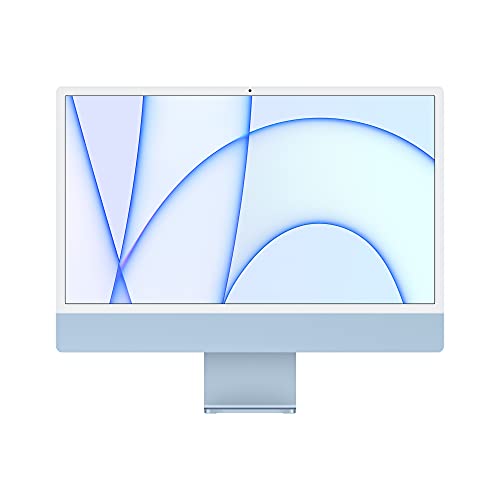
Apple iMac 24-Inch M1 Desktop
Best for: Users prioritizing display quality and compact design
- Storage
- 256GB SSD (what this guide is about)
- Processor
- Apple M1
- System Memory
- 8GB
- Storage Capacity
- 256GB SSD
- Screen Size
- 24-inch
- Display Resolution
- 4.5K Retina
View on Amazon: Apple iMac 24-Inch M1 Desktop Affiliate link
This 2021 Apple iMac features a 24-inch 4.5K Retina display and an Apple M1 chip with an 8-core CPU. It includes 8GB of system memory and a 256GB SSD. The design is strikingly thin at 11.5 mm. It offers a 1080p camera and a six-speaker sound system. This all-in-one desktop suits users who prioritize a vibrant display and compact form factor over high storage capacity.
Pros
- 24-inch 4.5K Retina display with P3 wide color gamut
- Apple M1 chip with 8-core CPU and 7-core GPU
- Six-speaker sound system for robust audio
- 1080p FaceTime HD camera
Cons
- 256GB SSD storage is smaller than the 512GB option
- 8GB RAM may limit heavy multitasking
- Only two Thunderbolt/USB 4 ports available
Good fit if
- You want a vibrant 4.5K display for media consumption
- You prefer a thin, colorful all-in-one design
- You need a compact desktop for light tasks
Skip if
- You require more than 256GB of internal storage
- You need high-end gaming performance
- You need extensive port connectivity without adapters
Verdict: Apple 2021 iMac 24-inch Blue delivers a sharp 4.5K display and efficient M1 performance in a thin chassis, making it ideal for users who value visual quality and space-saving design over maximum storage capacity.
Specifications side by side
| Spec | Apple iMac 24-Inch M1 Desktop | Apple iMac 24-Inch M1 Desktop |
|---|---|---|
| Processor | Apple M1 | Apple M1 |
| System Memory | 8GB | 8GB |
| Storage Capacity | 512GB SSD | 256GB SSD |
| Screen Size | 24-inch | 24-inch |
| Display Resolution | 4.5K Retina | 4.5K Retina |
| Graphics | 8-core GPU | 7-core GPU |
| Memory | 8GB RAM | 8GB RAM |
| Storage | 512GB SSD | 256GB SSD |
| Dimensions | 27.2 × 6.89 × 23.8 inches | 27.2 × 6.89 × 23.8 inches |
| Weight | 9.83 pounds | not stated |
| Size | 8GB - 512GB | 8GB - 256GB |
| Color | Green | Blue |
| Model | MGPG3LL/A | MJV93LL/A |
Frequently asked questions
Is 512GB enough for an all-in-one desktop?
Yes, 512GB provides ample space for most users. It allows you to store operating system files, applications, and a moderate amount of media. This capacity suits those who do not keep massive local libraries of 4K videos or hundreds of high-resolution photos.
Can I upgrade the SSD on an iMac?
No, the SSD is soldered directly to the logic board. You cannot replace or upgrade the storage after purchase. You must choose the correct capacity at the time of buying, as the drive is not user-serviceable later on.
Does the 256GB model have a slower drive?
No, both models use ultrafast solid-state drives. The speed of data access remains consistent across both storage sizes. The only difference is the total amount of space available for your files and applications, not the read or write speeds.
Which iMac is better for photo editing?
The 512GB model is better for photo editing. It offers double the storage capacity for large RAW image files. This extra space prevents you from running out of room quickly while working with extensive photo libraries or high-resolution assets.
Is the 24-inch display the same on both?
Yes, both models feature the same 24-inch 4.5K Retina display. The screen quality, color accuracy, and resolution are identical. Your visual experience will not change based on whether you choose the 256GB or 512GB storage option.
Will 256GB fill up quickly with apps?
It can fill up faster if you install many large programs. Modern applications and the operating system take up significant space. If you plan to store many games or creative software locally, the 512GB option provides a safer buffer against full storage warnings.
Do both models have the same RAM?
Yes, both the 256GB and 512GB versions come with 8GB of RAM. The memory configuration is identical across these specific models. Performance multitasking capabilities remain the same regardless of the internal storage size you select.